01

MCG 300

Resistance Temperature Detector

Get a Quote

MCG 300

Terminal operations managers, custody-transfer engineers, process engineers, and compliance officers rely on accurate product temperature data to calculate corrected volumes, manage inventory, and meet regulatory requirements. The MCG 300 Resistance Temperature Detector (RTD) delivers ±0.5 °F accuracy in a rugged stainless-steel design engineered specifically for demanding tank environments.

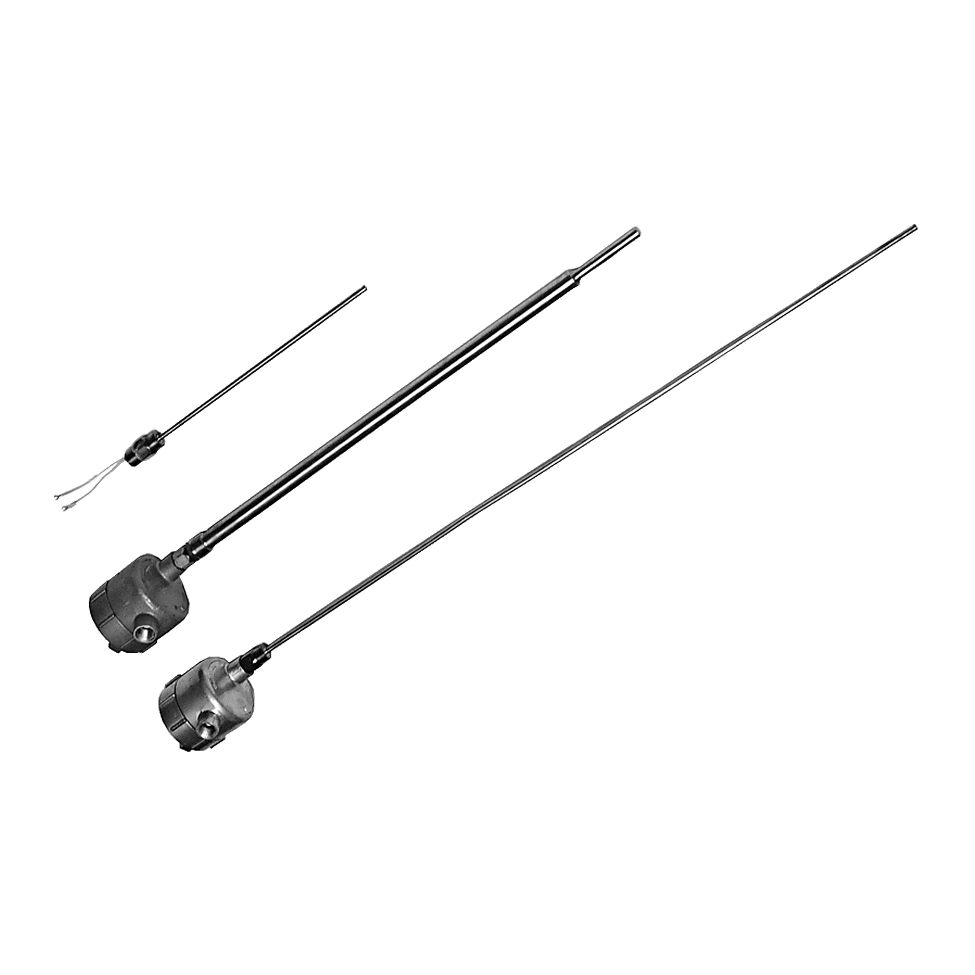
Unlike generic RTDs, the MCG 300 is purpose-built for storage tanks of any size or configuration. Rigid elements from 12 to 60 inches and flexible probes up to 100 feet accommodate cone-roof, floating-roof, and deep-tank installations.

Multiple calibration options, including copper, DIN platinum, and platinum-characterized copper, ensure compatibility with custody-transfer standards worldwide.

A dedicated reference lead eliminates lead-wire resistance effects across long cable runs typical in tank farms, preserving accuracy and long-term measurement stability.

With proven durability, broad installation flexibility, and seamless integration with gauging and inventory systems, the MCG 300 provides the reliable temperature measurement foundation required for fiscal accuracy, regulatory compliance, and dependable tank operations.

MCG 300
MCG 300 Resistance Temperature Detector

Details

The MCG 300 is designed to deliver stable and accurate temperature measurement across a wide range of storage, process, and custody-transfer environments.

Its rugged stainless-steel construction and flexible probe configurations allow installation in tanks of varying depths and designs while maintaining measurement accuracy over long service life.

Applications

  • Custody Transfer: Provides precise temperature data required for legal metrology calculations, ensuring accurate volume correction and minimizing billing disputes.
  • Process Control: Helps maintain consistent product quality by monitoring temperature changes that can affect downstream processing.
  • Inventory Management: Supports corrected-volume calculations and shrinkage monitoring for daily inventory reconciliation.
  • High-Pressure Vessels: Compatible with thermowells and mounting fittings designed for elevated-pressure service.
  • Floating-Roof Tanks: Probe configurations and mounting hardware maintain stable measurement even as roof position changes.
  • Deep or Large Storage Tanks: Flexible probe assemblies up to 100 feet allow temperature measurement at the required depth.
02

Technical Specifications

Parameter

Specification

Accuracy

±0.5 °F

Construction

Stainless-steel probe (other materials available)

Probe Lengths

Rigid: 12″, 18″, 24″, 36″, 48″, 60″

Flexible Probe Length

Up to 100 ft

Calibration Options

100 Ω Copper, 100 Ω DIN Platinum, 100 Ω Platinum-Characterized Copper

Thermowell Connections

Up to 1.5″ NPT or up to 3″ ANSI flange

Mounting Hardware

Available for cone-roof, floating-roof, and high-pressure tanks

Sensor Elements

Single or dual element

Installation Options

Normal or spring-loaded mounting

Housing

304 stainless steel with ½″ NPT connection
Support
2026 COST ESTIMATE

Support

If you have a question that we have not covered, please contact support and we will be happy to assist.

Contact Us

Why is temperature measurement important for custody transfer?

Liquid products expand and contract with temperature changes. For accurate billing and inventory reconciliation, the volume of a product must be corrected to a standard reference temperature (often 60 °F or 15 °C). The MCG 300’s precise temperature readings ensure this volume correction is accurate, preventing costly financial disputes.

Can the MCG 300 be used for custody-transfer applications?

+

Yes. Its ±0.5 °F accuracy and compatible calibration curves make it suitable for API, ISO, OIML, and other custody-transfer measurement systems.

Can the MCG 300 be used in corrosive environments?

+

Yes. The MCG 300 is built with a robust stainless-steel probe, making it highly durable and resistant to corrosion. Other materials are also available to suit specific chemical applications, ensuring long-term reliability in harsh tank conditions.

How does the MCG 300 improve accuracy compared to other RTDs?

+

The MCG 300 uses a reference lead to cancel out the resistance from the lead wires. This is a crucial feature that ensures the measured resistance is solely from the temperature-sensing element, leading to uncompromised accuracy and reducing potential errors caused by wire length or temperature fluctuations.

What tank types can it be installed on?

+

Cone-roof, floating-roof, fixed-roof, high-pressure, and large-volume tanks. Rigid and flexible probe options allow broad installation flexibility.

Bottom section image
Measure.
Monitor.
Protect.