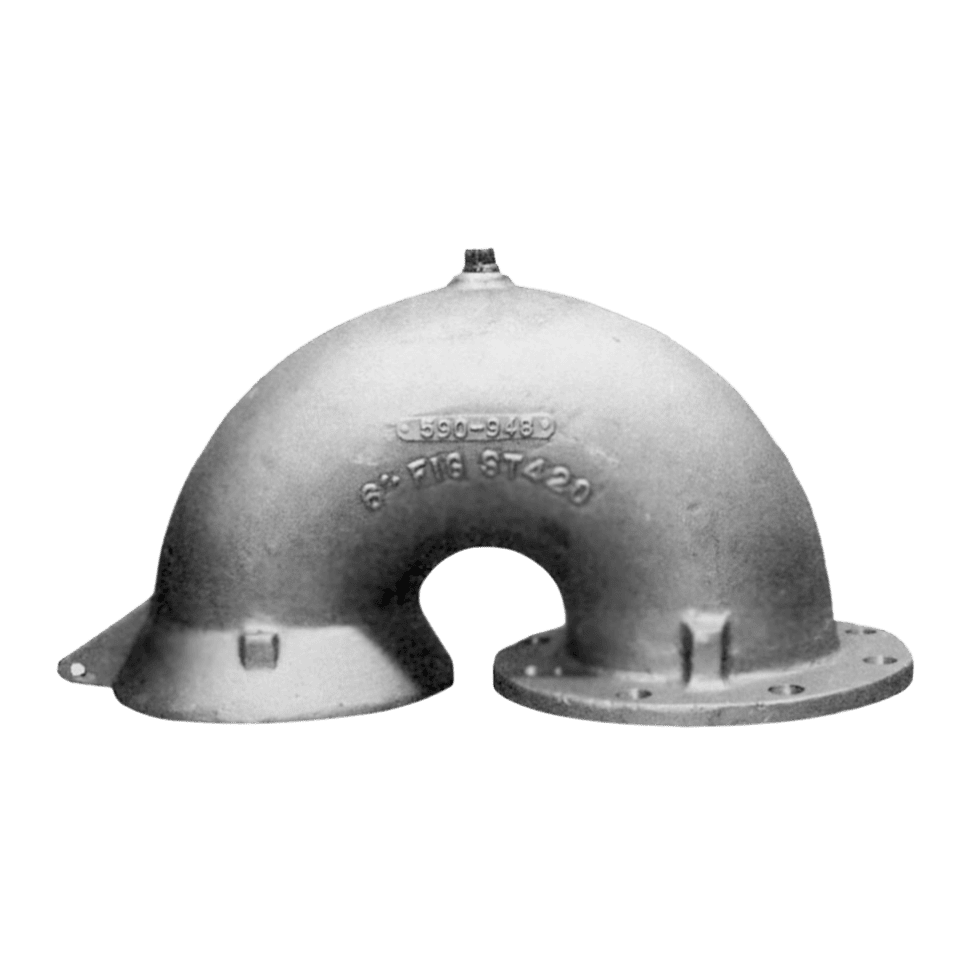
Free vents are open-flow tank fittings that allow unrestricted atmospheric breathing at a tank nozzle while preventing rainwater, debris, insects, and wildlife from entering the tank interior. They serve tanks that store non-volatile or low-hazard liquids where emissions control and pressure/vacuum setpoint management are not required, but where the tank must still breathe freely during filling, emptying, and thermal changes.
A free vent mounts directly to the tank roof nozzle and provides an open flow path between the tank vapor space and atmosphere. Internal baffles or weather hoods deflect rain and snow away from the opening. Screen elements block debris, insects, and birds. Unlike conservation vents, free vents impose no pressure or vacuum setpoint, the tank breathes at essentially atmospheric pressure at all times.
Free vents are sized to match the tank nozzle and the required breathing rate during maximum filling or emptying operations. Material selection, carbon steel or aluminum, depends on the stored product and the external environment. Where a tank is later reclassified to store a volatile product, the free vent must be replaced with a conservation vent or pressure/vacuum vent.
A conservation vent controls tank breathing through calibrated pressure and vacuum pallets that open at defined setpoints, reducing evaporative emissions and maintaining a slight positive pressure in the vapor space. A free vent provides no pressure or vacuum control, the tank breathes openly to atmosphere. Choose a conservation vent when the stored product is volatile or emissions regulations apply. Choose a free vent when the product is non-volatile and unrestricted breathing is acceptable. Free vents breathe; conservation vents control.
Free vents are specified when a tank requires atmospheric breathing with weather protection but does not require pressure/vacuum control or emissions management:
Free vents impose no flow restriction from pressure or vacuum pallets, providing the highest possible breathing rate for a given nozzle size during rapid filling or emptying operations.
For tanks storing water, brine, or other non-volatile liquids, a free vent provides the necessary weather and debris protection without the cost and maintenance of a conservation vent mechanism.
With no moving parts, setpoint adjustments, or sealing surfaces to maintain, free vents require only periodic screen inspection, reducing the maintenance burden compared to pressure/vacuum devices.
Internal screens and weather hood designs prevent insects, birds, leaves, and windblown debris from entering the tank through the breathing opening, protecting product quality and downstream equipment.
Available in carbon steel and aluminum configurations to match the external environment and stored product, maintaining long-term performance in coastal, humid, or chemically exposed installations.
Open-flow tank vent with debris screen for non-volatile liquid storage, providing unrestricted breathing with rain and debris protection.
Open-flow tank vent with integral weather hood and debris screen for non-volatile liquid storage, providing unrestricted breathing with rain and debris protection.
Provides both positive flashback protection from external sources and maximum venting with integral weather hood in a compact fitting.