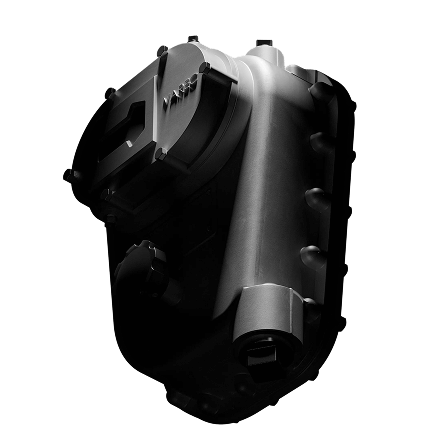
MCG 1097
MCG 5200
01

Wireless Integration

MCG 1097, MCG 5200
Secure field data without the wiring.

What It Is & How It Works

Wireless integration tools move tank-gauging, alarm, and safety data from field instruments to control systems without hardwired cable runs, conduit, or trenching. In storage tank environments, these tools replace or supplement traditional wired paths between level gauges, alarm probes, diagnostic sensors, and plant host systems, using industrial wireless protocols to securely and reliably deliver real-time data.

At the system level, battery-powered wireless field devices collect data at the tank and transmit it over WirelessHART to a central gateway. The gateway converts the wireless data into standard plant communications, typically Modbus over Ethernet or RS-485, for consumption by PLCs, DCS platforms, safety systems, and inventory software such as FuelsManager®. WirelessHART networks are self-organizing and self-healing, routing data around obstructions and maintaining reliability across large tank farms with changing RF conditions.

Installation requires no signal wiring at the tank. Wireless field devices mount directly on tank vents, nozzles, or instrument connections, while the gateway mounts in the control area and connects to the plant network through a single Ethernet or serial connection. Battery-powered devices such as the MCG 1097 require no external power supply, significantly reducing installation cost and safety exposure by eliminating conduit in hazardous areas.

WirelessHART networks support up to 250 devices per gateway, with configurable update rates that balance data freshness against battery life. For relief monitoring, alarm-on-change reporting ensures immediate notification while preserving battery for one year or longer of continuous operation.

Wireless Connectivity vs. Hardwired Data Path

Both approaches deliver field data to a control system. Hardwired transmitters and RTUs provide continuous, deterministic communication with no battery dependency, making them the standard for primary custody-transfer measurement and high-speed control loops. Wireless tools eliminate cable, conduit, and trenching costs and add instrumentation to tanks that are impractical or too expensive to wire.

Choose wireless when adding monitoring without new cable runs. Choose hardwired transmitters or field interface devices when deterministic communication or high-speed control is the priority.

When to Choose Wireless Integration

Wireless integration is the right approach when adding field data to a control system needs to happen without the cost or disruption of new wiring:

  • Retrofit and Brownfield Tank Farms Existing facilities where running new conduit or cable is expensive, disruptive, or impractical due to congested pipe racks, buried infrastructure, or site access constraints.
  • Remote or Isolated Tanks located far from control rooms or wiring infrastructure where traditional cable runs would require excessive material and labor.
  • Conservation Vent and Relief Monitoring pressure and vacuum relief events on Shand & Jurs conservation vents to verify proper operation, log events, and support EPA SPCC and API 2000 compliance.
  • Hazardous Area Installations Classified locations (Class I Division 1, ATEX, IECEx) where minimizing wired connections reduces ignition risk and simplifies area classification compliance.
  • Temporary, Mobile, or Expanding Installations Sites where tank configurations change frequently, or where portable monitoring is needed during commissioning, turnarounds, or temporary storage operations.
MCG 1097, MCG 5200
MCG 1097, MCG 5200
02

Why It Excels

01

Tank Farms Where Wiring Is the Largest Project Cost

Wireless eliminates cable, conduit, and trenching, often reducing installation time and cost by half or more compared to equivalent hardwired infrastructure.

02

Sites Requiring Rapid Deployment

Battery-powered wireless devices can be commissioned and transmitting data in hours, not weeks, without waiting for electrical contractors or conduit installation.

03

Hazardous Areas Where Minimizing Wired Connections Improves Safety

Fewer cable penetrations and conduit runs in classified areas reduce ignition risk and simplify area-classification documentation.

04

Facilities Adding Monitoring Incrementally

WirelessHART's self-organizing mesh architecture allows new devices to be added to the network at any time without re-engineering existing wiring or gateway configurations.

What to Consider Alongside Wireless Integration

Consider an alternative when:

  • The application requires deterministic, high-speed communication for custody-transfer measurement or safety interlock systems. See Data Transmitters.
  • You need multi-input aggregation, local display, and protocol conversion at the tank from a single enclosure. See Data Transmitters.
  • The facility already has wired infrastructure and needs centralized multi-tank monitoring with operator interaction. See Touch Panel Displays or Field Interface Devices & RTUs.

How Wireless Integration Fits Into a Larger System

  • Pair with conservation vents to monitor pressure and vacuum relief events wirelessly via the MCG 1097 WirelessHART Relief Alarm, creating a documented safety-event record without wired connections. See Pressure & Vacuum Vents.
  • Pair with MCG 7030 Touch Panel as the local alarm management and display interface, receiving wireless data through the MCG 5200 gateway for real-time vent status and diagnostic monitoring. See Touch Panels.
  • Pair with FuelsManager® to integrate wireless alarm and monitoring data into enterprise inventory management, compliance reporting, and automated alarm handling across the tank farm. See FuelsManager®.
03

Featured Products

01

MCG 1097 WirelessHART Relief Alarm

Battery-powered wireless monitoring of pressure and vacuum relief events on tank vents and safety devices.

02

MCG 5200 WirelessHART Gateway

Bridges WirelessHART field devices into PLC, DCS, or SCADA systems via Modbus over Ethernet or RS-485.

Bottom section image
Measure.
Monitor.
Protect.