01

MCG 8151

Flexible Magnetostrictive Level Probe

Get a Quote

MCG 8151

The MCG 8151 Flexible Magnetostrictive Level Probe is designed for terminal operators, refinery engineers, wastewater process managers, and EPC system integrators who require accurate and continuous liquid level and interface measurement in tanks with limited access or movement.

This probe delivers 0.001 inch resolution, average temperature sensing, and multi-interface detection within a flexible, corrosion-resistant PVDF housing.

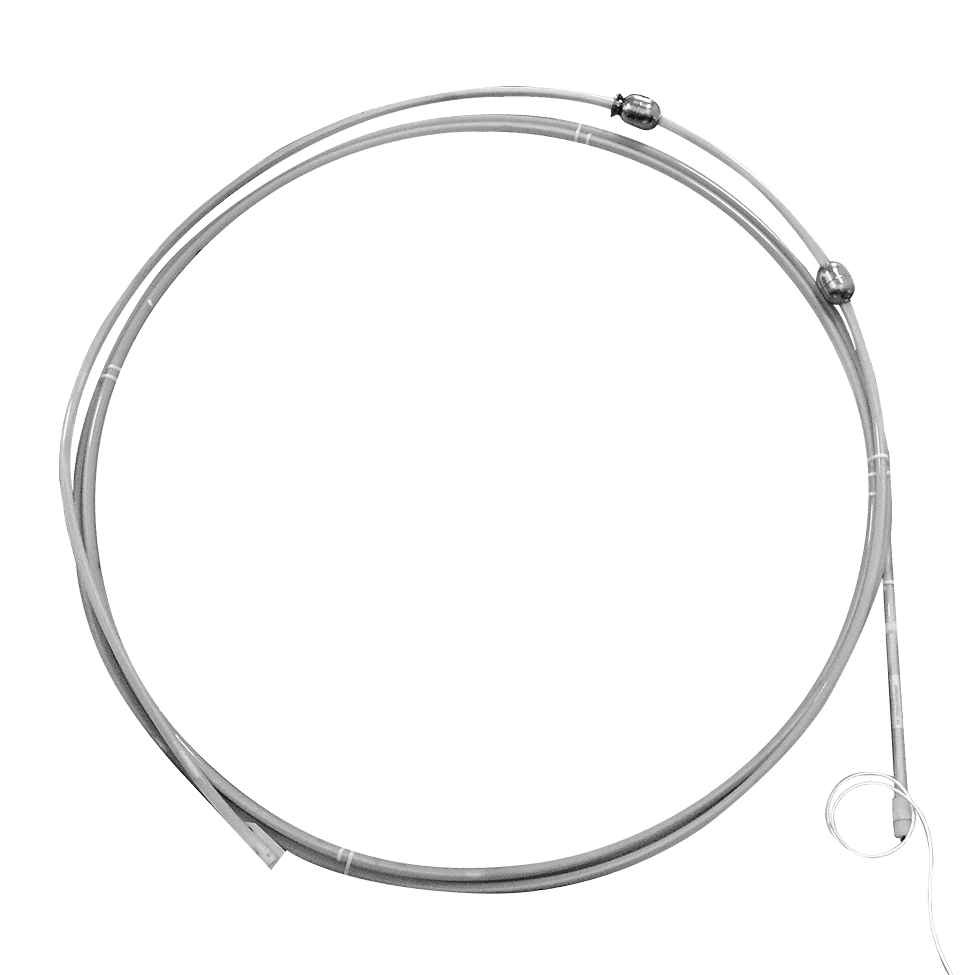
Unlike rigid probes or traditional float-based transmitters, the MCG 8151 features a flexible design for easy installation in tanks up to 70 feet deep. It supports dual-float operation for simultaneous measurement of product and interface levels and integrates five embedded RTDs to provide accurate average product temperature measurements.

MCG 8151
MCG 8151 Flexible Magnetostrictive Level Probe
MCG 8151

Features

Flexible PVDF Construction

Adapts to underground, horizontal, or limited-access tanks while maintaining durability in chemical or hydrocarbon environments.

High-Resolution Sensing

Provides ±0.001-inch repeatability to support custody-transfer accuracy, precise inventory reconciliation, and interface monitoring.

Dual-Float Capability

Measures product and interface levels simultaneously, improving contamination detection and supporting decanting or BS&W control.

Five-Point Temperature Averaging

Embedded RTDs generate true average temperature for accurate API volume correction and improved product quality validation.

Integrated Point-Switch Mode

Functions as both a continuous probe and a high/low-level alarm, reducing the need for additional instrumentation or wiring.

Magnetostrictive Stability

Wiedemann-effect technology ensures long-term measurement reliability with no drift and no mechanical wear over years of service.

Applications

  • Tank Retrofits: Flexible construction enables installation through 2–4″ riser openings, avoiding structural modifications and lowering retrofit labor effort.
  • Custody Transfer: High-resolution digital measurement supports reconciled inventories and reduces billing disputes across regulated storage operations.
  • Interface Monitoring: Dual floats accurately identify product-to-water or product-to-product interfaces for contamination prevention and quality assurance.
  • Temperature Compensation: Five RTDs provide accurate average temperature data, preventing volume-calculation errors caused by stratified product layers.
  • Limited-Access Tanks: Underground and buried tanks benefit from the probe’s flexibility, enabling installation where rigid probes cannot physically fit.
  • Environmental Protection: Integrated switch functionality supports overfill prevention, leak mitigation, and regulatory compliance for high-risk storage systems. Flexible construction enables installation through 2–4″ riser openings, avoiding structural modifications and lowering retrofit labor effort.
02

Specifications

Measurement Technology

Magnetostrictive Wiedemann Effect

Resolution

±0.001 inch

Length Range

Up to 840 in (70 ft)

Measurement Outputs

Product and interface levels; optional interstitial capability

Temperature Measurement

Average of five (5) internal RTDs (0.01 °F resolution)

Materials

PVDF flexible probe; stainless steel or polyurethane floats (2″ or 3″ sizes)

Mounting Options

2″, 3″, or 4″ openings (NPT or flanged); top-mounted installation

Communication Protocol

L&J Tankway standard via MCG 1010M receiver

Operating Temperature

–40 °C to +85 °C (ambient electronics); process rated to +150 °C typical

Output Interface

Continuous digital signal via Tankway bus; optional analog converter

Power Requirements

12–36 V DC loop-powered from receiver

Accuracy

±0.001 inch level; ±0.2 °F temperature

Certification

Explosion-proof / intrinsically safe when used with approved receivers

Maintenance

No calibration required after factory setup; self-diagnostics with error reporting

Model Options

Single or dual float; product + interface measurement with/without interstitial capability

Contact Support
2026 COST ESTIMATE

Contact Support

If you have questions not covered here, please contact the Cognesense support team for assistance.

Contact Us

Why is a flexible probe better for certain tank applications?

A flexible probe is ideal for tanks that are deep (up to 70 ft), horizontal, or have limited access risers. It can be easily coiled for shipping and dropped through small tank openings (2-inch or 3-inch) without requiring scaffolding or major construction, significantly reducing installation time and cost.

How does the MCG 8151 measure two liquid levels at once?

+

The probe uses a dual-float system. One float is heavy enough to sink through the product and rest on the water/product interface (for the interface level), while a second, lighter float rides on the top surface of the liquid (for the product level). The magnetostrictive receiver tracks the position of both magnetic floats simultaneously.

Does the five-point temperature measurement provide custody-grade data?

+

Yes. The five embedded RTDs allow the probe to accurately map the vertical temperature profile of the product, mitigating errors caused by thermal stratification. This calculated true average temperature is a fundamental requirement for achieving the high accuracy and compliance standards (API 2540) needed for custody transfer.

Summary

The MCG 8151 Flexible Magnetostrictive Level Probe provides ±0.001-inch resolution continuous level measurement in tanks up to 70 feet using flexible PVDF construction that routes through existing openings without tank modifications. Designed for petroleum terminals, refineries, and chemical storage, the MCG 8151 integrates with Cognesense’s receivers and control systems for accurate inventory management and custody transfer.

L&J
Measure.
Monitor.
Protect.