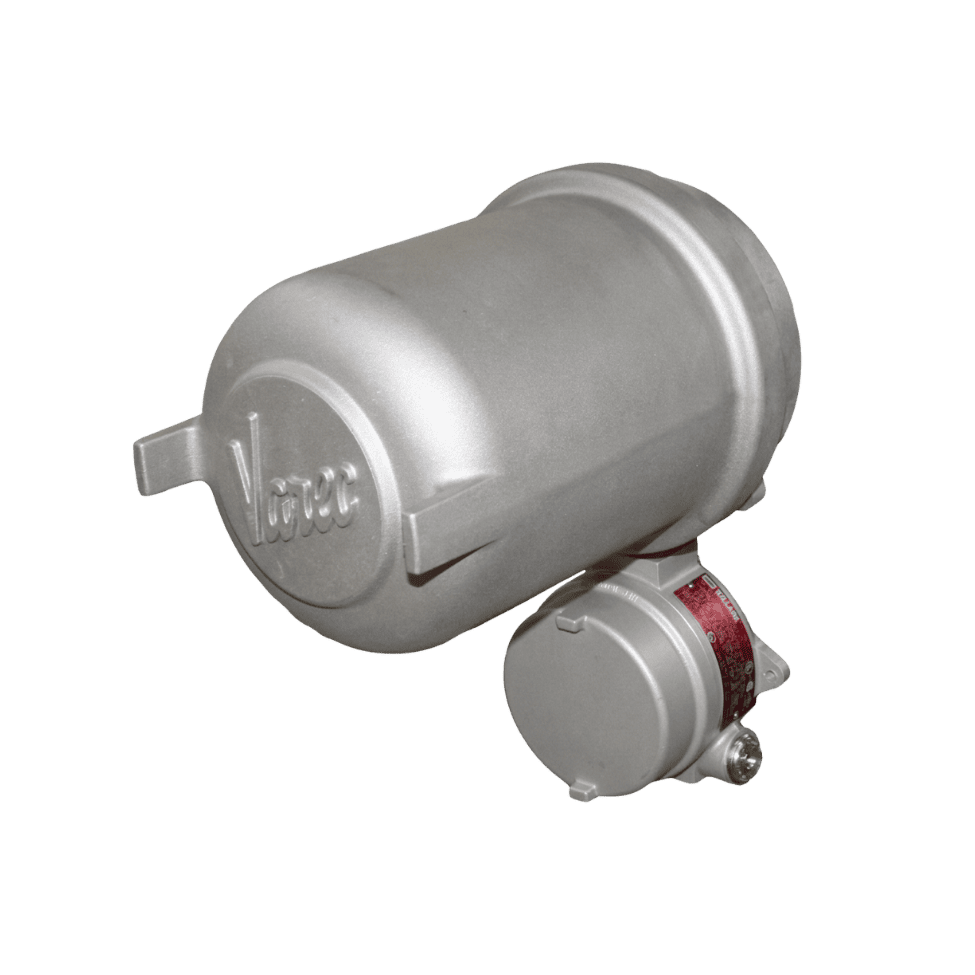
The Varec 2910 Float & Tape Level Switch is designed for terminal operators, refinery engineers, tank farm safety officers, and EPC project teams who need an independent, power-free alarm layer on bulk liquid storage tanks.
Unlike electronic level switches that rely on sensors, logic circuits, or battery backup, the 2910 FTLS uses a direct-drive stainless-steel cam mechanism to actuate up to six SPDT switches from the motion of the float and tape — no power, no communications electronics, no firmware in the alarm path.
Available in 2, 4, or 6 SPDT configurations with independently adjustable set points and NO/NC selection, the 2910 drives annunciators, relays, solenoids, and horns at defined high-high, high, low, and low-low tank levels.
Explosion-proof die-cast aluminum construction, IP66/NEMA 4 protection, and cFMus plus ATEX/IECEx flameproof approvals (Ex db IIB T5 Gb, Class I Zone 1) qualify the 2910 for hazardous areas across refineries, chemical plants, aviation fuel farms, and product terminals.
The 2910 FTLS direct-mounts to Varec, L&J, GSI, and Sakura float and tape gauges — including the 2500 and 2520 ATG — and replaces the legacy Varec 2557 alarm limit switch without gauge modification, delivering an independent protection layer that programs like API 2350 rely on.
Direct-drive cam actuates switches from float motion without power, electronics, or battery backup, providing a separate alarm layer programs like API 2350 rely on.
Supplied with 2, 4, or 6 SPDT cam-operated switches, each independently adjustable for set point and NO/NC, covering high-high, high, low, and low-low levels.
Stainless-steel gears deliver long service life, ±1/16 in (1.58 mm) switching repeatability, and reliable actuation without drift common to electronic sensor-based switches.
Die-cast aluminum enclosure carries cFMus, ATEX, and IECEx flameproof approvals (Ex db IIB T5 Gb) with IP66/NEMA 4 for Class I Division 1/Zone 1.
Mounts directly to Varec 2500/2520 ATG, L&J, GSI, and Sakura gauges without brackets or modification, supporting in-service retrofit without tank shutdown.
Replaces the legacy Varec 2557 alarm limit switch on a like-for-like mounting, extending the life of installed float and tape assets without gauge rework.
2, 4, or 6 SPDT cam-operated switches; 2/4: 180° adjustable dwell; 6: 18° adjustable dwell; independently adjustable set points
Each switch independently adjustable for set point and normally open / normally closed
±1/16 in (1.58 mm) typical
0–25 ft, 0–50 ft, 0–100 ft (0–7.5 m, 0–15 m, 0–30 m)
Up to 11 A @ 125/250/277 VAC; 4 A @ 125 VAC (tungsten lamp); 1/3 HP @ 125 VAC / 250 VDC; 1/2 A @ 125 VDC; 1/4 A @ 250 VDC
–40 °F to +185 °F (–40 °C to +85 °C)
Explosion-proof die-cast aluminum; IP66 / NEMA 4
Transmitter enclosure: 2 × 3/4″ NPT; terminal junction box: 2 × 3/4″ NPT
cFMus (US/Canada); ATEX/IECEx flameproof Ex II 2G, Ex db IIB T5 Gb; Class I Zone 1 (–20 °C ≤ Ta ≤ +85 °C); IP66
None — fully mechanical switch actuation
Direct-mount to Varec 2500 / 2520 ATG, L&J, GSI, Sakura float and tape gauges
Drop-in replacement for Varec 2557 alarm limit switch
If you have questions not covered here, please contact the Cognesense support team for assistance.
Contact Us ↵No. The 2910 FTLS is a limit-switch-only device; its outputs are hardwired SPDT contacts. For digital protocol output and RTD temperature integration alongside the mechanical alarms, specify the 2920 Float & Tape Transmitter. Both devices can be installed on the same gauge simultaneously so one installation provides both alarm switching and digital level and temperature data.
Choose 2, 4, or 6 SPDT switches, each with an independently adjustable set point and NO/NC selection. This supports separate high-high, high, low, and low-low alarm levels from a single installation without additional switching hardware.
Typical ratings include up to 11 A at 125, 250, or 277 VAC; 4 A at 125 VAC for tungsten filament lamps; 1/3 HP at 125 VAC or 250 VDC; 1/2 A at 125 VDC; and 1/4 A at 250 VDC. Confirm full electrical ratings from the datasheet before specifying relay or solenoid loads.
Yes. The 2910 carries cFMus (US and Canada) and ATEX/IECEx flameproof approvals (Ex db IIB T5 Gb) with IP66 protection, suitable for Class I Division 1 and Zone 1 hazardous locations across refineries, chemical plants, and terminals.
The 2910 direct-mounts to most mechanical float and tape gauges, including the Varec 2500 ATG, Varec 2520 ATG, L&J, GSI, and Sakura units. It also replaces the legacy Varec 2557 alarm limit switch as a drop-in upgrade on existing installations with no gauge rework.
No. Switch actuation is fully mechanical via a direct-drive cam and stainless-steel gear train. The 2910 continues to function correctly during and after power outages, which is the reason it qualifies as an independent protection layer in API 2350 programs.
Yes. The 2910 FTLS and 2920 Float & Tape Transmitter can be installed on the same float and tape gauge simultaneously. This gives the tank both an independent mechanical alarm layer (2910) and digital protocol output with RTD temperature (2920) from a single gauge installation.
The 2910 FTLS provides a mechanically independent, power-free alarm path that is separate from the primary level gauge and its electronics. This architecture supports API 2350 overfill prevention programs, which rely on independent protection layers. Site-specific conformance depends on the full overfill prevention plan; consult your Cognesense application engineer to align the 2910’s configuration with your LOPA and SIL requirements.
With over a century of tank gauging and overfill protection heritage, Cognesense continues to set the global standard for independent mechanical alarm layers. The Varec 2910 FTLS delivers power-free cam-operated SPDT switching across 2, 4, or 6 independently configurable set points, with Ex db IIB T5 Gb and IP66/NEMA 4 approvals for hazardous-area service and direct-mount compatibility with Varec, L&J, GSI, and Sakura float-and-tape gauges. The result is a dedicated, audit-ready alarm path trusted wherever you need to measure, monitor, and protect what matters most.