01

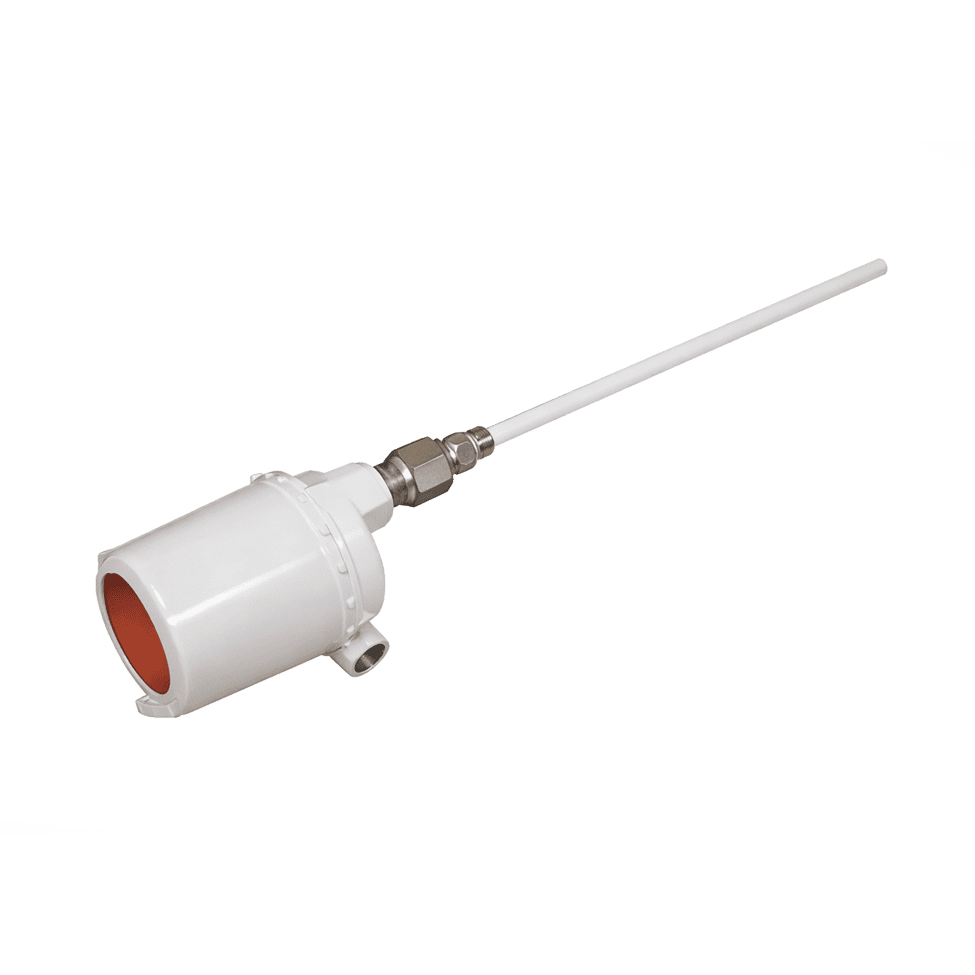
Captrol 510

RF Capacitance Dual-Point Level Switch

Get a Quote

Captrol 510

The Captrol 510 is designed for process engineers, automation technicians, and plant operators who require reliable dual-point control for liquids, slurries, or bulk solids.

The instrument delivers accurate, maintenance-free level detection with dual relay functionality in a single rugged, explosion-proof device.

Unlike mechanical or optical switches that can clog, wear out, or drift over time, the Captrol 510 uses RF capacitance technology with independent high and low setpoints, non-interacting calibration controls, and solid-state fail-safe electronics. This combination provides stable performance even in demanding industrial environments.

With universal voltage compatibility (115/230 VAC or 24 VDC), dual independent relays, and a rugged NEMA-rated enclosure, the Captrol 510 simplifies control and safety integration in chemical processing, food production, wastewater treatment, and bulk solids handling.

One probe provides two switching points with zero routine maintenance, making it ideal for pump-up/pump-down control, overflow prevention, and bin level management.

Cap Analog 410
Captrol 510 RF Capacitance Dual-Point Level Switch
Captrol 510

Features

Dual Independent Setpoints

Enables precise, separate control of high and low levels using one probe, supporting pump-up/pump-down sequences without requiring multiple instruments.

High-Frequency RF Capacitance

A 2 MHz excitation signal ensures stable switching through dust, foam, coatings, or noise, maintaining reliability in challenging process conditions.

Non-Interacting Calibration

Separate multi-turn controls let each setpoint be adjusted independently, allowing accurate field tuning without affecting the other trip level.

Selectable Fail-Safe Mode

Configurable high or low fail-safe behavior ensures the relay de-energizes safely during power loss or wiring faults, protecting pumps and tanks.

Explosion-Proof Construction

A cast-aluminum NEMA 4/5/7/9/12 enclosure enables safe installation in hazardous, dusty, or outdoor areas subject to chemical or environmental exposure.

Universal Power Compatibility

Supports 115 VAC, 230 VAC, or 24 VDC operation, reducing spare-part variation and simplifying installation across multiple sites and control systems.

Applications

  • Pump Control Systems: Dual setpoints manage pump-up and pump-down cycles using a single probe, enabling reliable automatic filling or emptying control without extra hardware.
  • Powders and Granular Solids: RF capacitance penetrates dust and low-DK materials, providing stable switching where mechanical or optical devices clog, jam, or fail frequently.
  • Slurries and Coating Fluids: Driven-guard probe design rejects buildup and conductive films, ensuring accurate switching even with viscous, sticky, or coating process media.
  • Hazardous Area Tanks: Explosion-proof housing and fail-safe modes allow dependable level control in Class I and Class II process environments with ignition or dust risks.
  • Variable-Dielectric Liquids: High-frequency circuitry compensates for changing product conductivity, maintaining calibration stability despite batch variations or temperature shifts.
  • Food-Grade Processing Systems: Available 3A sanitary fittings and food-safe probe materials provide contamination-free level control for hygienic tanks, mixers, and process vessels.
02

Specifications

Technology

RF Capacitance, solid-state electronics with adjustable dual setpoints

Frequency

2 MHz excitation signal

Output Relays

Up to 2 × Form C (DPDT) independently adjustable relays

Power Supply

115 VAC (100–130 V), 230 VAC (200–260 V), or 24 VDC (18–28 V)

Sensitivity

0.5 pF or less

Response Time

100 ms standard; adjustable up to 30 seconds

Fail-Safe Modes

Selectable High or Low level (switch de-energized on fault or power loss)

Electronics Temperature Limits

–40 °F to +160 °F (–40 °C to +71 °C)

Probe Temperature Limits

Up to +450 °F (+232 °C) with lagging extension

Enclosure Ratings

Die-cast aluminum with polyester coating; NEMA 4, 5, 7, 9, 12

Enclosure Approvals

Hazardous Approvals

Class I, Groups C & D; Class II, Groups E, F, & G

Mounting

¾″ NPT, sanitary (3A), or flanged (carbon steel or stainless steel)

Probe Styles

Rigid (up to 20″) or flexible cable (up to 250 ft / 76.2 m) Teflon, Kynar, or stainless steel construction Food-grade 3A fittings available Indicators.

Calibration Controls

  • Multi-turn potentiometers for Setpoint and Differential
  • DIP switches for range, interlock, and fail-safe selection
Contact Support
2026 COST ESTIMATE

Contact Support

If you have questions not covered here, please contact the Cognesense support team for assistance.

Contact Us

What makes the Captrol 510 different from other level switches?

It combines two independent level setpoints in a single device, providing both high and low-level control with non-interacting calibration—perfect for pump-up/pump-down or dual alarm applications.

Can it be used with powders and granular materials?

+

Yes. The RF capacitance design and driven-guard probe allow accurate detection even in dusty, foamy, or low-dielectric media.

Is it suitable for hazardous locations?

+

Absolutely. The Captrol 510 is rated NEMA 7/9 explosion-proof and approved for Class I & II Div 1 service.

How is calibration performed?

+

Each setpoint uses a multi-turn potentiometer for precise adjustment, with separate controls that don’t affect each other.

Why is non-interacting calibration important?

+

In older dual-point switches, adjusting the high-level setpoint could inadvertently affect the low-level setpoint, leading to unstable operation and repeated service calls. The Captrol 510‘s non-interacting controls ensure that each setpoint and differential can be precisely adjusted independently, guaranteeing stable, simple, and accurate field setup.

What happens during a power loss?

+

A fail-safe mode can be selected to de-energize relays in either high or low-level conditions, maintaining a predictable, safe state.

Can one probe detect both high and low points?

+

Yes. The Captrol 510’s dual-point design uses a single probe to measure both levels—reducing penetrations, wiring, and installation cost. It is ideal for efficient pump-up/pump-down control or integrated alarm functions.

How does the Captrol 510 control two levels with one probe?

+

The Captrol 510 is designed with a single probe that feeds the capacitance signal to two separate, independent electronic circuits within the controller. Each circuit has its own set of potentiometers to define a Set-point (where it switches) and Differential (hysteresis), allowing one circuit to manage the low level and the other to manage the high level, all using the same signal.

What industries commonly use the Captrol 510?

+

It’s widely used in chemical plants, food and beverage processing, wastewater systems, and bulk solids storage where dependable dual-level control and safety monitoring are critical.

Is the Captrol 510 reliable in media that tends to coat sensors?

+

Yes. The switch’s high-frequency (2MHz) RF signal and advanced driven guard probe design are highly effective at electronically ignoring conductive buildup or coating on the probe. This allows the switch to maintain accurate detection of the bulk product level, reducing false trips and eliminating the need for frequent cleaning.

Summary

The Captrol 510 builds on the legacy of the Cognesense brand, offering a durable, dual-point RF capacitance level switch for high/low level detection, pump control, and alarm functions.

With independent setpoints, fail-safe reliability, and universal voltage operation, it provides exceptional flexibility across chemical, food, wastewater, and industrial process applications.

The result is a smart, simple, and safe level control solution—trusted wherever you need to measure, monitor, and protect what matters most.

L&J
Measure.
Monitor.
Protect.