01

616 / 716 Top Mounted Level Control Switches

Stainless Steel Displacers

Get a Quote

Omnitrol 616 / 716

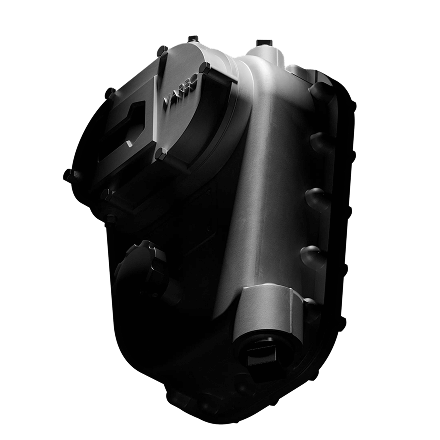
For tank farm operators, refinery engineers, wastewater plant operators, and chemical processors who require dependable level monitoring, pump protection, and overflow prevention, the Omnitrol 616 and 716 Top Mounted Level Control Switches provide a rugged and reliable solution.

These displacer-actuated switches use stainless steel displacers designed for long service life and are ideally suited for corrosive, hazardous, or high-value liquid products.

Unlike side-mounted or welded designs, the top-mounted configuration allows easier tank access and simplified maintenance, while still delivering precise actuation, durable construction, and dependable long-term performance.

Omnitrol 616 / 716
Omnitrol 616 / 716

Details

The Omnitrol 616 / 716 Series uses a magnetically actuated snap-action switch mechanism triggered by a stainless steel sinking displacer.

As the liquid level rises or falls, buoyancy forces act on the displacer connected to a suspension cable. When the displacer reaches the configured level, the internal magnetic mechanism activates the microswitch, providing reliable and repeatable switching.

The top-mounted design allows installation from the top of tanks or vessels, making inspection and servicing significantly easier than side-mounted designs.

Built for demanding industrial service, these switches are used for level detection, pump control, and overfill protection across a wide range of process liquids.

Applications

  • Refineries and Terminals: Provides reliable pump cutout, overfill protection, and important level monitoring for tank inventory management.
  • Chemical Processing: Stainless steel displacers perform well in aggressive or corrosive chemical environments.
  • Water and Wastewater: Protects pumps and maintains controlled liquid levels in treatment basins, storage tanks, and utility systems.
  • General Industrial Use: Suitable for many liquid level monitoring and control applications across plant operations.
  • Compatible Process Media:
    • Water
    • Oils
    • Petrochemicals
    • Acids and alkalis
    • Hot condensate
02

Technical Specifications and Key Features

Parameter

Specification

Mounting

Top-mounted, 2½″ NPT or ANSI flange (150#–1500#)

Actuation

Magnetic snap-action switch mechanism

Switch Types

SPDT or DPDT micro switches

Displacer

Stainless steel weighted sinking displacer

Cable Length

10 ft standard; up to 75 ft (600 series) or 40 ft (700 series)

Specific Gravity Range

0.70 – 2.0 (±0.2 variation)

Temperature Rating

Up to 500°F (material dependent)

Differential Range

2.5″ to full cable travel

Certifications

UL and CSA

Housing

WR or Explosion-Proof / Vapor-Proof / Rain Tight
Support
2026 COST ESTIMATE

Support

If you have questions not covered here, please contact support for assistance.

Contact Us

How does the displacer mechanism work for level detection?

The displacer mechanism relies on the change in buoyant force exerted on a suspended displacer element as the liquid level rises or falls. When the liquid level crosses a specific trip point, the resulting change in buoyant force moves the displacer, which mechanically actuates the switch contacts to trigger an alarm or control action.

Why choose stainless steel displacers?

+

Stainless steel is the ‘workhorse’ choice. Stainless steel displacers offer superior resistance to corrosion, aggressive chemicals, and deformation at elevated temperatures compared to materials like plastic or aluminum. This durability ensures the switch remains reliable and accurate over a longer service cycle, minimizing replacement frequency while saving cost vs graphite if the extreme-duty requirements of graphite are not present.

How does the top-mounted design simplify maintenance?

+

In a top-mounted configuration, the entire switch assembly, including the displacer, can be accessed and removed from the top of the tank. This eliminates the need for side-entry work or extensive scaffolding and is generally considered easier and safer for inspection and replacement compared to accessing units mounted deep inside the tank or on the side chamber.

Bottom section image
Measure.
Monitor.
Protect.