01

613 / 713 Displacers

Get a Quote

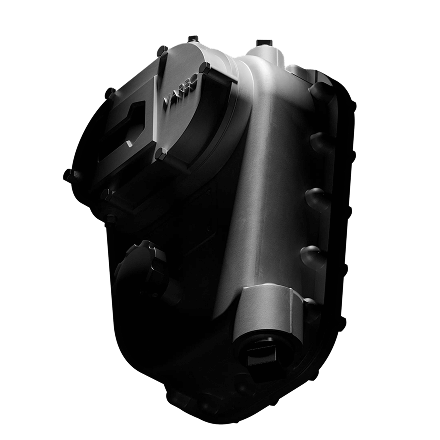
613 / 713 Displacers

For refinery operators, chemical plant engineers, wastewater utilities, terminal automation teams, and EPC designers who require dependable point-level control, pump automation, and overfill protection in harsh industrial environments, the Omnitrol 613 / 713 Series with porcelain displacers offers proven magnetic displacer switching, exceptional chemical resistance, and safe operation in hazardous areas.

Unlike floats, reed switches, or capacitive sensors that fail in foamy, dirty, or coating-prone liquids, the Omnitrol 613 / 713 uses buoyancy-based displacers and a snap-action magnetic mechanism for accurate, drift-free switching unaffected by turbulence, vapor layers, solids, or buildup.

The 613 model provides a single switching point, while the 713 delivers dual independent alarm points, making it ideal for pump start and stop or API 2350 high-high level shutdown systems.

Porcelain displacers offer a unique advantage in corrosive or fouling environments where stainless steel may corrode and graphite is unnecessary.

613 / 713 Displacers

Details

The Omnitrol 613 / 713 Porcelain Displacer Series uses Archimedes’ principle to sense level changes. As buoyancy shifts, a sealed porcelain displacer moves, transmitting force to a magnet assembly that triggers a snap-action microswitch, with no process contact to the switch enclosure.

Porcelain displacers provide excellent chemical resistance and anti-fouling properties, making them ideal for solvents, corrosive liquids, caustics, and water-based processes.

They fill a niche between:

  • Stainless steel displacers, which may corrode in certain chemical applications
  • Graphite displacers, which are designed for extreme service but at a higher cost

The dual-point 713 model supports redundant high alarms or pump control, while the 613 model is ideal for single high or low level protection.

With no electronics exposed to process media, the system provides long service life and dependable operation in applications where electronic level devices may struggle.

Applications

  • Foam or Viscous Liquids: Displacer sensing provides reliable switching in foamy or sticky media where other probes struggle, ensuring stability in harsh service.
  • Overfill and High-High Alarms: The dual-actuator 713 model provides two high alarms for API 2350-aligned overfill protection, enhancing environmental and safety compliance.
  • Coating or Fouling Risk: Porcelain displacers provide a smooth non-metallic surface resistant to fouling, minimizing maintenance and service interruptions.
  • Boilers and Pressurized Vessels: High-pressure isolation tubes and rugged construction ensure safe operation in high-temperature and high-pressure applications.
  • Pump Control (Start and Stop): Dual setpoints protect pumps from running dry or over-cycling, reducing equipment wear and maintenance.
02

Technical Specifications

Parameter

Specification

Technology

Magnetic displacer, buoyancy-actuated

Models

613 (single point) / 713 (dual point)

Displacer Material

Porcelain (chemical-resistant, anti-fouling)

Isolation Tube

304 or 316 stainless steel

Switch Types

SPDT or DPDT micro switch

Mounting

Top mount, 2½″ NPT or flanged connections

Pressure Rating

Up to approximately 1500 psi (103 bar)

Temperature Rating

Up to approximately 400°F (204°C), depending on configuration

Housing Options

WR or Explosion-Proof / Vapor-Proof / Rain Tight

Conduit Entry

¾″ NPT

Certifications

UL and CSA approved

Maintenance

No calibration required; periodic inspection recommended
Support
2026 COST ESTIMATE

Support

If you have questions not covered here, please contact support for assistance.

Contact Us

Why use porcelain instead of stainless steel or graphite displacers?

Porcelain resists chemical attack and coating, offering the ideal balance where stainless may corrode and graphite offers more ruggedness than needed (higher cost).

How does the magnetic snap-action mechanism prevent false alarms in turbulent tanks?

+

The magnetic snap-action mechanism uses internal magnets to lock the switch contacts into their ON/OFF position. The process liquid must exert enough buoyant force to physically overcome this magnetic latch. This design makes the switch highly immune to minor agitation, surface foam, or turbulence that would cause traditional float switches to chatter or produce false alarms.

Can the 613 / 713 be configured for both high-level and low-level control in one tank?

+

Yes. The Omnitrol 713 model is the dual-actuator version, meaning it houses two independent switching mechanisms that can be set at different levels. This allows the device to manage both a low-level pump-off setpoint and a high-level alarm setpoint simultaneously using a single tank penetration.

When should the 713 be chosen over the 613?

+

Use the 713 for dual alarms or pump control (start/stop or high-high). The 613 is for a single alarm or control point.

Does the device require calibration?

+

No — factory-set to media specific gravity; no field calibration required.

Is it suitable for foamy or turbulent liquids?

+

Yes — displacer technology is immune to foam, turbulence, and vibration.

Can it be used in pressurized tanks?

+

Yes — high-pressure isolation tube options support pressurized and boiler service.

Is the unit explosion-proof?

+

Yes — available with Class I & II Div 1 approvals for hazardous process environments.

What industries commonly use porcelain displacers?

+

Refineries, chemical plants, terminals, power plants, and wastewater facilities—especially where chemicals, solvents, or fouling media are present.

Bottom section image
Measure.
Monitor.
Protect.