01

Shand & Jurs 97300M Waste Gas Burner

Manual-Start Biogas Burner

Get a Quote

Shand & Jurs 97300M Waste Gas Burner

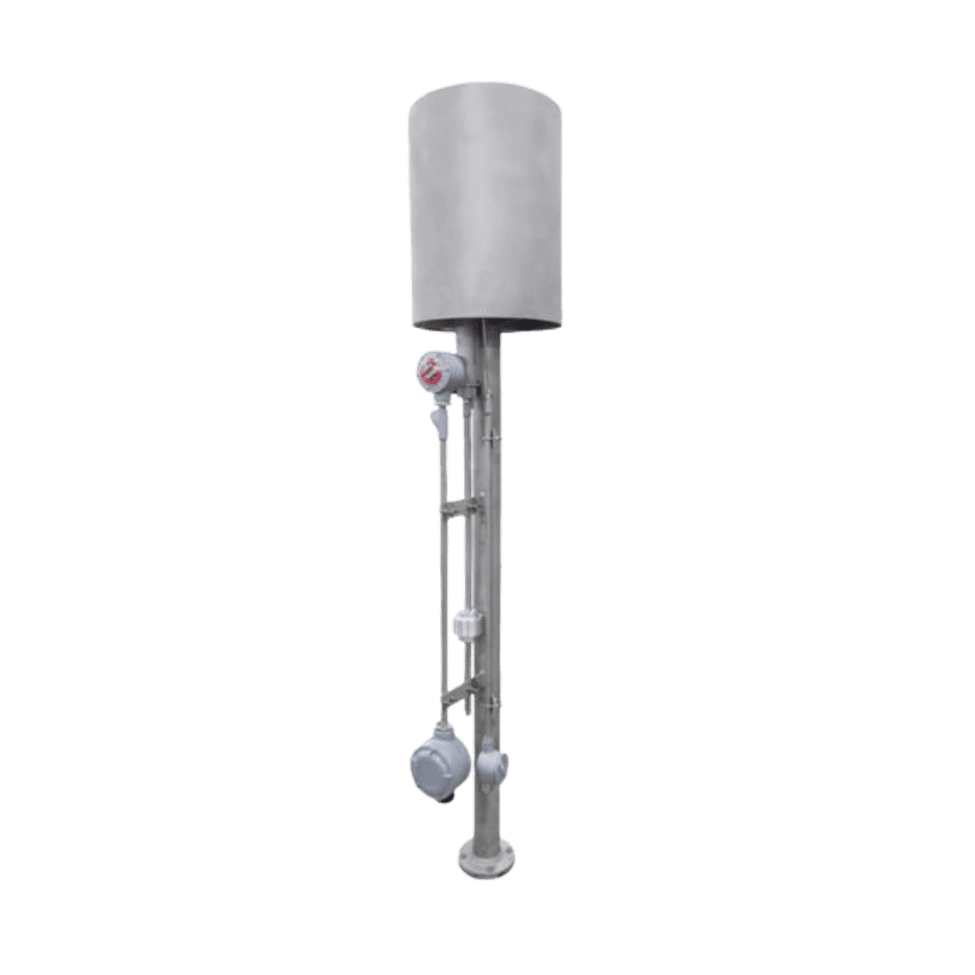
For wastewater plant operators, digester commissioning engineers, and landfill gas site managers, the Shand & Jurs 97300M Waste Gas Burner combusts excess digester or low-pressure process gas when operators need to manually initiate disposal — during commissioning, maintenance windows, or when the automated flare is offline.

Unlike atmospheric venting or waiting out production while the main flare is down, the 97300M provides a manually initiated combustion layer that keeps the digester producing and the gas holder within safe pressure while automated systems are unavailable.

A stoichiometric pilot and cyclonic swirl-induced flare tip sustain stable combustion across variable methane concentration, pressure, and saturated moisture. A local ignition control box with continuous or intermittent spark lets operators initiate combustion on demand without a remote or SCADA dependency.

The 97300M suits maintenance bypass, commissioning startup, anaerobic digesters, lagoon systems, landfill gas, and backup flare service — aligned with NFPA 820 biogas-handling expectations and typically installed alongside an automated burner as a contingency disposal path.

Shand & Jurs 97300M
Shand & Jurs 97300M Waste Gas Burner
02

Features

Stoichiometric Pilot Assembly

Maintains reliable ignition and proper air-to-fuel mixture across wide BTU and pressure fluctuations typical of wet biogas streams.

Cyclonic Swirl Flare Tip

Swirl inducers drive efficient air-fuel mixing at the tip, holding stable flame retention across variable methane concentration and gas quality.

Wind-Shrouded Burner Stack

Induces combustion air and shields the flame front, supporting stable combustion in outdoor wind speeds up to 150 mph.

Local Ignition Control Box

Operators start the burner directly at the unit using continuous or intermittent spark modes, without remote signal or SCADA dependency.

Continuous or Intermittent Spark

Spark mode is field-selectable, supporting constant pilot readiness or timed ignition for shorter manual-start events and reduced electrode wear.

Heavy-Gauge Stainless Construction

304L stainless stack and piping (316L optional) withstand corrosive biogas service and repeated thermal cycling in outdoor digester installations.

Applications

  • Maintenance Bypass: Disposes of biogas safely while the automated flare is out of service, keeping the digester producing without uncontrolled methane release.
  • Commissioning Startup: Burns off early biogas production during digester commissioning before the engine, scrubber, or primary flare control system is online.
  • Anaerobic Digesters: Provides a contingency combustion layer on municipal or industrial digesters where pressure must be relieved during upset or outage conditions.
  • Lagoon Systems: Handles intermittent biogas release from covered lagoon digesters where automated flaring may not be economical for low-duty sites.
  • Landfill Gas: Supports operator-initiated disposal at landfill gas collection sites during planned engine or blower outages and emergency pressure events.
  • Backup Flare Service: Installs alongside an automated burner to maintain a dependable manual disposal path when the primary flare control system fails.
03

Specifications

Parameter

Specification

Device Type

Manual-start biogas waste gas burner (candlestick flare)

Sizes

2″, 3″, 4″, 6″, 8″, 10″, 12″

Capacity Range

4,000 – 218,600 ft³/hr

Turndown

10:1 (typical)

Stack Burner Connection

ANSI 150 lb. Raised Face Flange

Wind Rating

Up to 150 mph

Biogas Composition

50–70% CH₄ with CO₂ balance and trace gases

Moisture Content

Saturated (100% humidity)

Pilot Gas

Natural gas, propane, or waste gas (≥500 BTU/ft³)

Pilot Gas Pressure

12 in. W.C. – 10 PSIG

Ignition Modes

Continuous spark or intermittent spark

Start Mode

Manual (local operator initiation)

Power Requirements

120 VAC, 4 A or 240 VAC, 2 A

Controller Temperature Range

−20°F to 150°F

Stack and Shroud Material

304L Stainless Steel (316L optional)

Piping and Pilot Material

304L Stainless Steel (316L optional)

Hardware

Stainless Steel

Options

Pilot gas selection (natural gas or propane); continuous or intermittent spark; NEMA 4X carbon steel, stainless, or NEMA 7 hazardous-area enclosure; 304L or 316L construction; 120 or 220/240 VAC supply; beveled shroud sizes matched to burner diameter

Contact Support
2026 COST ESTIMATE

Contact Support

If you have questions not covered here, please contact the Cognesense support team for assistance.

Contact Us

When should I specify the 97300M instead of the automated 97300 or 97301?

The 97300M is the manual-start variant: operators initiate combustion locally using a continuous or intermittent spark ignition system. Specify it where automated pressure- or SCADA-initiated flaring is not required — for example as a backup flare alongside an automated unit, during commissioning before site controls are live, or on low-duty covered lagoon sites where manual disposal is sufficient.

Does the 97300M need a SCADA or remote signal to operate?

+

No. Operation is fully local. The 97300M uses a local ignition control box with spark initiation, which operators start on demand at the unit. This removes the SCADA or remote-start dependency that the automated 97300 and 97301 rely on, making the 97300M well suited as a contingency layer when site automation is offline.

What methane concentration and moisture can the burner handle?

+

The 97300M is designed for 50–70% CH₄ biogas saturated at 100% humidity. The stoichiometric pilot sustains stable combustion across that BTU and moisture range without upstream gas conditioning, which matches typical digester, lagoon, and landfill gas conditions.

What wind and environmental conditions are supported?

+

The wind-shrouded stack supports stable combustion in outdoor wind speeds up to 150 mph. The controller operates across −20°F to 150°F ambient. Material options include 316L stainless construction for aggressive biogas environments.

What enclosure and electrical options are available?

+

Electrical enclosures include NEMA 4X carbon steel, NEMA 4X stainless steel, and NEMA 7 for classified hazardous locations. Power is 120 VAC at 4 A standard or 220/240 VAC at 2 A optional, so the unit can be matched to the site’s available supply.

How does the 97300M support safe plant operation during flare maintenance?

+

Installed alongside an automated 97300 or 97301, the 97300M gives the plant a dependable manual disposal layer when the primary flare is offline for service or when site automation is unavailable. That preserves pressure stability in the digester or gas holder and prevents uncontrolled methane venting — supporting biogas-handling architecture aligned with NFPA 820 expectations, with final compliance determined at the site.

Summary

With over a century of tank-safety heritage inside Cognesense, the Shand & Jurs 97300M Waste Gas Burner is chosen when biogas must be safely disposed of manually during commissioning, maintenance, or automation outages. Its stoichiometric pilot, cyclonic flare tip, and wind-shrouded stack hold stable combustion of wet methane while the local ignition control box gives operators direct start capability without SCADA. Installed alongside automated flares, it is trusted wherever you need to measure, monitor, and protect what matters most.

Bottom section image
Measure.
Monitor.
Protect.