01

Shand & Jurs 97150 Single Port Regulator

Back Pressure Safety Shutoff Regulator

Get a Quote

Shand & Jurs 97150 Single Port Regulator

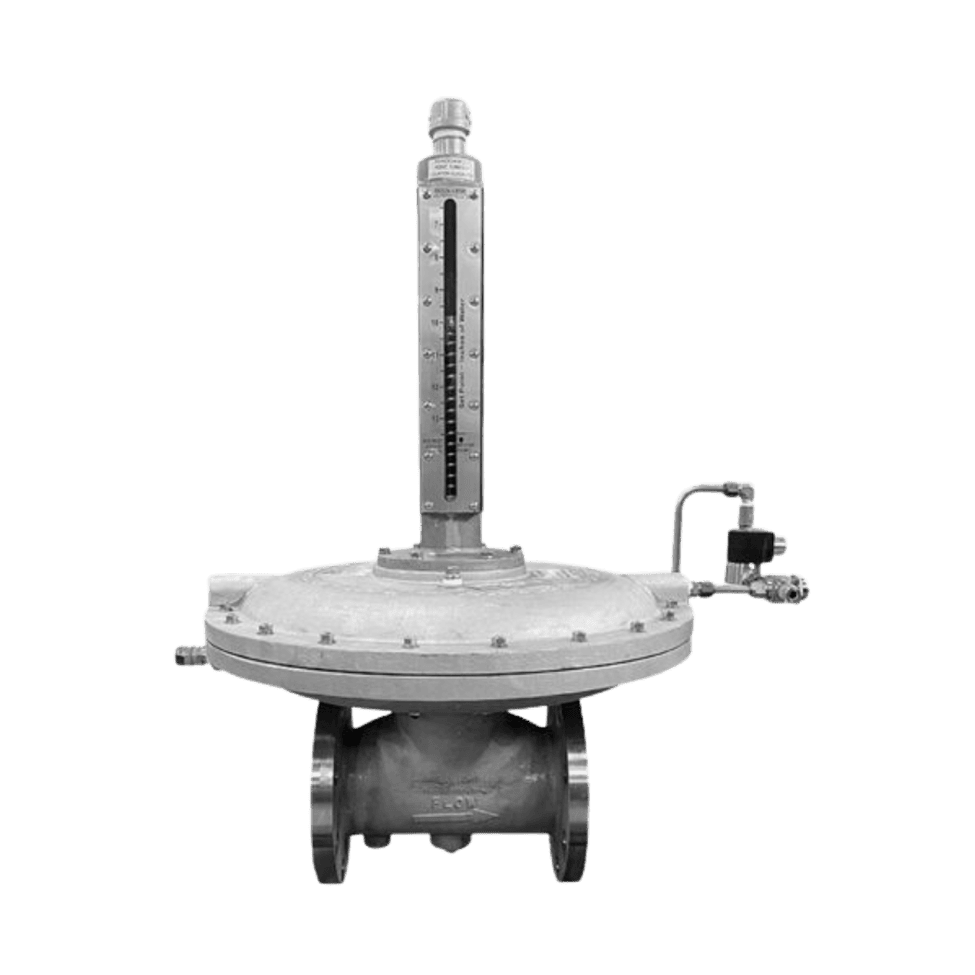
For biogas plant operators, landfill-gas engineers, and flare-system designers, the Shand & Jurs Biogas 97150 Single Port Regulator stabilizes low-pressure gas headers feeding flares, burners, and utility fuel systems while providing emergency isolation on demand.

Unlike conventional pilot regulators that react slowly to pulsation in wet methane service, the 97150 uses a large spring-loaded diaphragm to dampen line bounce and an external sense connection to read true header pressure instead of localized turbulence at the valve inlet.

A field-adjustable setpoint and position indicator allow live tuning without pulling the valve, and an optional NEMA 7 three-way solenoid tied into the burner control delivers positive closure when the combustion system shuts down.

Rated to 20 in. W.C. across 2″–12″ flanged sizes in cast aluminum with low-copper or 316 stainless pallet options, the 97150 serves digester gas, landfill gas, waste gas, and utility fuel applications where stable upstream pressure is essential.

Shand & Jurs 97150
Shand & Jurs 97150 Single Port Regulator
02

Features

Diaphragm Back Pressure Control

Diaphragm-operated actuation stabilizes upstream pressure ahead of flares and burners, preventing flow fluctuation that destabilizes combustion in low-pressure gas trains.

Large Spring-Loaded Diaphragm

Oversized sensing diaphragm damps pulsation and line oscillation in wet methane headers, reducing flare flameouts and nuisance burner shutdowns across the system.

External Sense Connection

Reads true header pressure at least ten pipe diameters upstream, avoiding localized turbulence so the regulator controls actual system pressure, not valve-body noise.

Integrated 3-Way Solenoid

Optional NEMA 7 solenoid provides positive emergency isolation tied to the burner control, closing the valve on shutdown to limit uncontrolled gas release.

Field-Adjustable Setpoint

Adjustable spring with indicator allows ±3″ W.C. tuning around the factory setpoint in service, cutting commissioning time and repeat service visits.

Serviceable Internal Components

Accessible diaphragm, pallet, and seat simplify cleaning in wet gas duty, extending service intervals in corrosive methane environments prone to fouling.

Applications

  • Flare Headers: Stabilizes upstream pressure feeding waste gas flares, preventing flame instability and nuisance shutdowns during varying digester or landfill gas production.
  • Burner Supply: Delivers consistent fuel pressure to boilers, heaters, and process burners, protecting combustion performance and reducing incomplete burn during demand swings.
  • Digester Gas: Controls low-pressure digester header output, accommodating pulsation from mixing and biological activity while maintaining stable downstream handling of wet methane.
  • Landfill Gas: Regulates landfill extraction headers where pressure varies with well-field operation, supporting downstream treatment, utilization, and flare destruction equipment reliably.
  • Waste Gas Systems: Protects industrial waste gas networks from pressure excursions, working alongside flame arresters and conservation vents within staged gas-handling trains.
  • Utility Fuel Gas: Maintains stable supply pressure across utility fuel distribution at wastewater and biogas sites where multiple consumers draw from a shared low-pressure header.
03

Specifications

Parameter

Specification

Operating Function

Back Pressure Regulator with Optional Shutoff

Typical Control Range

±3″ W.C. of the factory set point

Maximum Operating Pressure

20 in. W.C.

Line Sizes

2″ – 12″

Connection

150 lb. ANSI FF Flange

Sensing

External Sense Line (≥10 pipe diameters upstream)

Body Material

Cast Aluminum

Pallet

Low-Copper Aluminum or 316 Stainless Steel

Diaphragm

Nylon Reinforced Buna-N

Spring

Stainless Steel

3-way Solenoid

NEMA 7

3-Way Solenoid Bypass

Optional to function in manual mode

Contact Support
2026 COST ESTIMATE

Contact Support

If you have questions not covered here, please contact the Cognesense support team for assistance.

Contact Us

How does the 97150 differ from a standard pressure reducing regulator?

The 97150 is a back pressure regulator, controlling upstream rather than downstream pressure. It stays closed until header pressure reaches the setpoint, stabilizing feed to flares and burners rather than limiting downstream supply pressure.

When is the three-way solenoid option required?

+

When the regulator must also serve as an emergency safety shutoff, a NEMA 7 three-way solenoid is added. Tied into the burner or flare control, it closes positively on shutdown so the valve acts as both a pressure stabilizer and an isolation point.

Why is an external sense line specified ten pipe diameters upstream?

+

Positioning the sense connection at least ten pipe diameters upstream avoids localized turbulence at the valve inlet, so the diaphragm reads true header pressure. This improves control stability in low-pressure wet gas headers where nozzle flow distorts local pressure.

What pressure and sizes are available?

+

The 97150 is rated to 20 in. W.C. maximum operating pressure and available in 2″–12″ line sizes with 150 lb. ANSI FF flange connections. Set pressure tunes ±3″ W.C. around the factory setpoint.

Is the 97150 suitable for wet methane and biogas service?

+

Yes. The body is cast aluminum, the pallet is low-copper aluminum or 316 stainless, the diaphragm is nylon-reinforced Buna-N, and the spring is stainless steel. Accessible internal components simplify cleaning in wet gas duty.

Can the solenoid be bypassed for manual operation?

+

Yes. An optional three-way solenoid bypass allows the regulator to operate manually when the solenoid is isolated, supporting commissioning, testing, and troubleshooting without removing the valve from service.

Summary

With over a century of tank-safety heritage inside Cognesense, the Shand & Jurs Biogas 97150 Single Port Regulator is chosen for low-pressure gas trains where stable upstream pressure and emergency isolation must live in a single device. Its spring-loaded diaphragm damps line oscillation, its external sense connection reads real header pressure, and its optional NEMA 7 solenoid delivers positive shutoff on burner trips. Installed ahead of flares and burners, it is trusted wherever you need to measure, monitor, and protect what matters most.

Bottom section image
Measure.
Monitor.
Protect.