01

Shand & Jurs 97100 Manual Drip Trap

Manual Condensate Drip Trap

Get a Quote

Shand & Jurs 97100 Manual Drip Trap

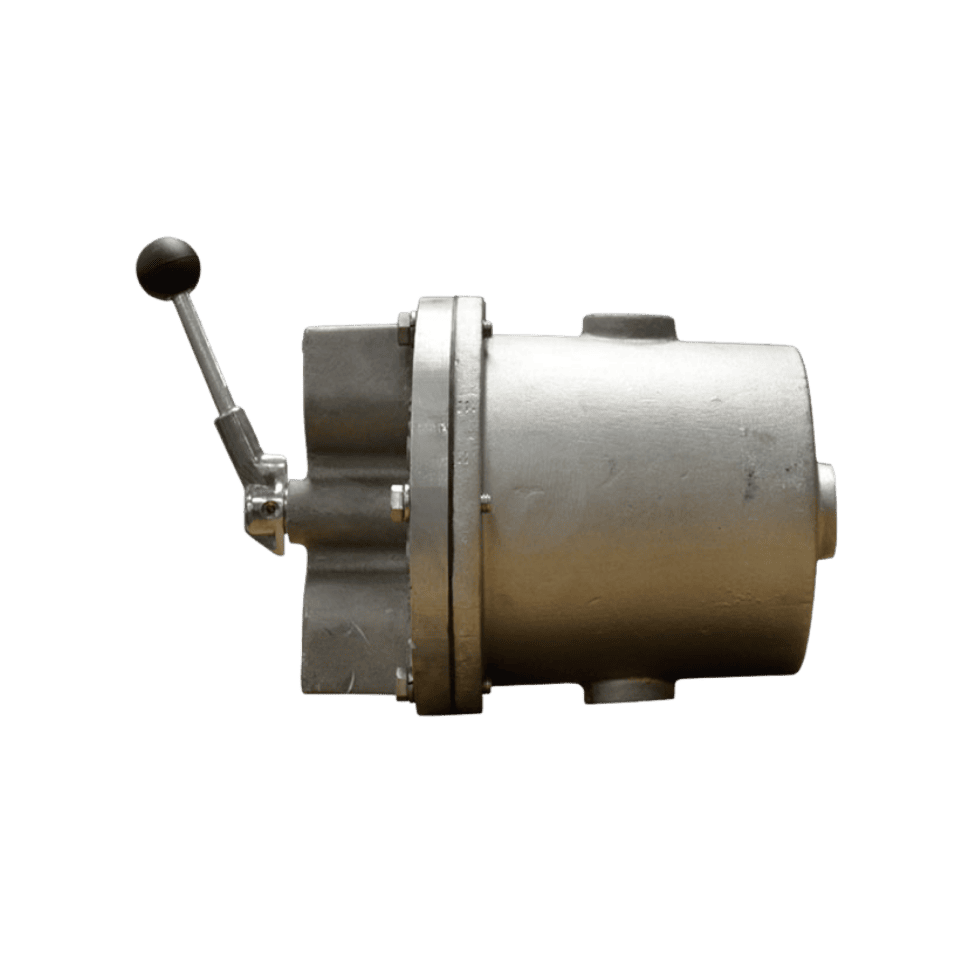
For digester operators, biogas plant engineers, and gas-train maintenance teams, the Shand & Jurs 97100 Manual Drip Trap removes accumulated condensate from low-pressure gas piping at system low points, where trapped liquid would restrict flow, upset pressure control, and accelerate corrosion.

Unlike float-operated drip traps, which are not permitted by the 10 States Standard for biogas service, the 97100 uses a manually rotated ported disc valve that seals the inlet gas path before opening the drain passage, removing liquid without gas release or air ingress.

Condensate collects in a 3- or 6-quart reservoir rated for 5 or 25 PSIG service, with 1-inch NPT connections that install directly into condensate legs and equipment drops. Aluminum or 316 stainless steel body options match the corrosivity of the gas stream.

The manual isolation design is applied where accumulation is intermittent and routine inspection already occurs, eliminating floats and controls while preserving predictable operation and piping integrity across digester gas, landfill gas, and utility fuel gas systems.

Shand & Jurs 97100
Shand & Jurs 97100 Manual Drip Trap
02

Features

Ported Rotating Disc Valve

Seals the gas path before opening the drain, preventing methane release or air ingress during manual condensate removal.

Manual Actuation

Aligns with the 10 States Standard, which does not permit float-operated drip traps in regulated biogas and digester gas service.

3 or 6 Quart Reservoir

Stores intermittent condensate accumulation between scheduled inspection intervals, sized to match expected liquid load at each drip leg.

5 or 25 PSIG Rating

Matches typical low-pressure gas piping envelopes found in digester, landfill gas, and utility fuel gas distribution.

1-Inch NPT Connections

Installs directly at piping low points without additional adapters, simplifying retrofit into existing condensate legs and equipment drops.

Corrosion-Resistant Trim

Stainless internals and optional 316 stainless body withstand wet and contaminated gas streams typical of biogas and landfill service.

Applications

  • Gas Piping Low Points: Drains accumulated liquid from horizontal runs, drip legs, and vertical risers where condensate collects during normal operation.
  • Headers and Manifolds: Removes condensate at distribution headers so downstream regulators and burners continue to receive a stable, dry gas supply.
  • Condensate Legs: Fits purpose-built drip legs on digester gas, landfill gas, and utility gas piping where routine inspection and manual drainage already occur.
  • Equipment Drops: Protects individual end-use drops feeding burners, boilers, and flares by removing liquid upstream of control valves and ignition trains.
  • Low-Pressure Gas Systems: Suits service up to 5 or 25 PSIG where continuous float operation is prohibited and operator-initiated drainage is the preferred method.
  • Utility Gas Distribution: Installs on attended utility gas lines where inspection rounds are already in place and manual isolation is the established maintenance practice.
03

Specifications

Parameter

Specification

Device Type

Manual condensate drip trap

Service

Low-pressure gas

Maximum Working Pressure

5 PSIG or 25 PSIG

Reservoir Capacity

3-quart or 6-quart

Inlet/Outlet Connections

1″ NPT

Operating Mechanism

Manual rotating ported disc valve

Drain Isolation

Positive gas shut-off before drain opening

Body Materials

Aluminum or 316 Stainless Steel

Internal Components

Stainless Steel

Seal Materials

NBR or CR

Installation Location

Gas piping low points

Options

Anodized aluminum disc/cover, air inlet connection, insulation jacket

Contact Support
2026 COST ESTIMATE

Contact Support

If you have questions not covered here, please contact the Cognesense support team for assistance.

Contact Us

Why is a float-operated drip trap not used for biogas service?

The 10 States Standard does not permit float-operated drip traps on regulated biogas and digester gas piping because a stuck float can release methane or admit air into a flammable gas stream. The 97100 uses a manually rotated ported disc valve that seals the gas path positively before the drain opens, which aligns with the standard’s operator-controlled drainage requirement.

How does the ported disc valve prevent gas release?

+

Rotating the disc first closes the gas inlet to the drain passage, then opens the drain. The gas path is always sealed during drainage, so no methane escapes to atmosphere and no air enters the piping system. This sequenced operation is the core safety feature of the 97100 and the reason it is appropriate for confined or occupied gas-handling locations.

When should I select the 3-quart vs. the 6-quart reservoir?

+

Size the reservoir against the expected condensate accumulation rate and the planned inspection interval. Wet digester gas and landfill gas at longer intervals typically call for the 6-quart chamber; drier service or shorter rounds are well matched to the 3-quart chamber. Both are rated for 5 or 25 PSIG service and use the same 1-inch NPT connections.

What is the difference between the 97100 and the 97100E?

+

The 97100 is manually actuated for attended sites where operators drain condensate during routine inspection rounds. The 97100E uses an electric actuator that can be timed, remotely triggered, or integrated into SCADA, and is the appropriate choice where drainage must occur on schedule or command without on-site personnel.

When is the 97101 the right drip trap instead?

+

Use the 97101 High-Pressure Manual Drip Trap where the piping operates above the 25 PSIG envelope of the 97100. The 97101 is rated for service up to 100 PSIG on pressurized biogas, landfill gas, and vapor recovery headers. Below that envelope, the 97100 is the correct low-pressure device.

What materials are available for corrosive gas service?

+

The 97100 is offered in aluminum or 316 stainless steel body construction, with stainless internal components and a choice of NBR or CR seal materials. An anodized aluminum disc/cover option is available for outdoor installations. Material selection should be matched to the gas composition and the presence of moisture or H₂S.

Does the trap need an insulation jacket in cold climates?

+

An optional insulation jacket is available to reduce the risk of freezing in cold-weather installations; a maintained heat source is required under the jacket. Use it on outdoor drip legs and exposed piping where ambient conditions would otherwise freeze accumulated condensate and block drainage.

Summary

With over a century of tank-safety heritage, Cognesense continues the Shand & Jurs 97100 Manual Drip Trap as a straightforward, code-aligned answer to condensate accumulation in low-pressure biogas, digester gas, and utility gas piping. Its ported disc valve seals the gas path before opening the drain, eliminating methane release during manual drainage and matching the 10 States Standard preference for operator-controlled service. For attended sites where routine inspection is already in place, the 97100 is trusted wherever you need to measure, monitor, and protect what matters most.

Bottom section image
Measure.
Monitor.
Protect.