01

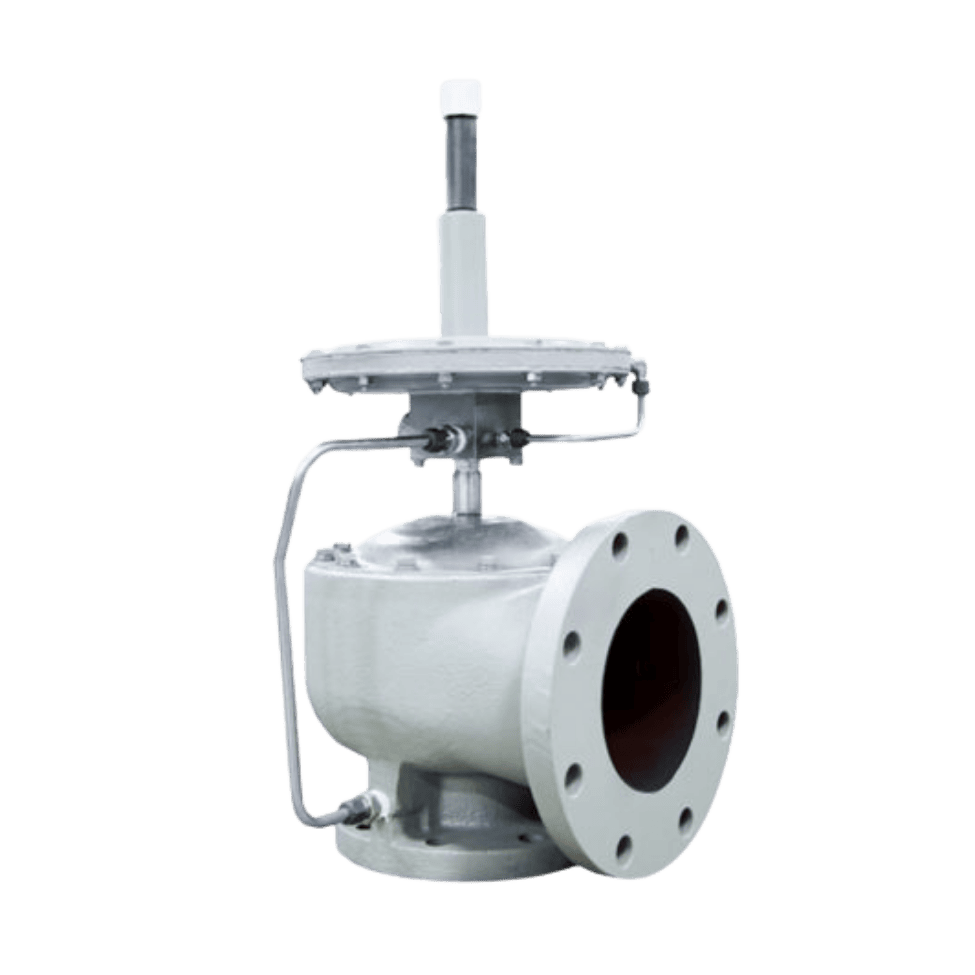
Shand & Jurs 94640 Pilot Operated Relief Valve

Pilot Operated Pressure Relief Valve

Get a Quote

Shand & Jurs 94640 Pilot Operated Relief Valve

For terminal operators, blanketing-system engineers, and vapor-recovery specialists, the Shand & Jurs 94640 Pilot Operated Relief Valve controls storage-tank pressure close to setpoint rather than simply venting it when an excursion occurs.

Unlike conventional spring-loaded direct-acting relief valves that begin lifting well before setpoint and leak throughout routine breathing, the 94640 uses a diaphragm pilot to keep the main seat tightly loaded until the set pressure is reached, then unloads the chamber for full-lift relief with minimal blowdown.

A field test connection allows set-pressure verification without removing the valve from service, and remote sensing is available for applications where tank nozzle turbulence would otherwise distort the pressure reference. Relief capacity is sized per API 2000.

The 94640 suits nitrogen blanketing, vapor recovery, floating roof tanks, and pressure-regulated storage where maintaining a defined setpoint is necessary rather than merely relieving it — reducing routine vapor loss, stabilizing blanketing gas consumption, and cutting evaporative emissions.

Shand & Jurs 94640
Shand & Jurs 94640 Pilot Operated Relief Valve
02

Features

Diaphragm Sensing Pilot

Senses true tank pressure and keeps the main seat sealed until setpoint, preventing premature opening or gradual leakage during routine breathing.

Pressure-Loaded Main Seat

Loading pressure holds the primary seat tight during normal breathing so routine vapor expansion never causes leakage or partial lift.

Full-Lift Rapid Relief

At setpoint the pilot unloads the main chamber, opening fully for rated capacity rather than throttling part-way like direct-acting valves.

Automatic Reseal

As tank pressure falls, loading pressure is automatically restored, closing the valve bubble-tight and stopping vapor escape without extended venting.

Field Test Connection

Set pressure can be verified and calibrated without removing the valve from service, reducing downtime and avoiding full teardown on recommissioning.

Remote Sensing Option

Optional remote sense line reads true vapor-space pressure instead of nozzle turbulence, improving control accuracy in high-flow or vented installations.

Applications

  • Nitrogen Blanketing: Holds blanketing gas at a tight setpoint, stabilizing consumption and preventing nuisance venting that increases nitrogen cost and oxygen ingress risk.
  • Vapor Recovery: Seals bubble-tight between relief events, keeping hydrocarbon vapors in the recovery header instead of bleeding to atmosphere through a leaking seat.
  • Floating Roof Tanks: Maintains roof seal performance by regulating vapor-space pressure close to setpoint, protecting against both overpressure and inward collapse under thermal swings.
  • Pressure-Regulated Storage: Suited to tanks intentionally operated under controlled internal pressure where routine leakage or partial opening would destabilize the blanketing or recovery system.
  • High Vapor Value Liquids: Reduces evaporative losses on gasoline, solvents, and specialty chemicals, retaining thousands of dollars in annual product per tank through bubble-tight reseal.
  • VOC & Odor Reduction: Limits routine venting events, cutting VOC and odor emissions at terminals and chemical sites where neighbor impact and air quality matter.
03

Specifications

Parameter

Specification

Device Type

Pilot-operated pressure relief valve

Valve Sizes

2″×3″, 3″×4″, 4″×6″, 6″×8″, 8″×10″, 10″×12″, 12″×16″

Set Pressure Range

0.11 psig to 15.0 psig (discrete ranges available)

Temperature Range

−40°F (−40°C) to +400°F (+204°C). Material and diaphragm dependent — specify at time of order.

Pilot Type

Diaphragm sensing

Operation

Pressure-actuated pilot control

Mounting

Tank nozzle

Flanged Connection

ANSI 150 lb (standard). Other flange types available.

Sensing

Integral or remote

Pressure Control

Near-setpoint regulation

Sizing Basis

API 2000

Body Material

Aluminum, Carbon Steel, or 316 Stainless Steel

Trim

Stainless steel

Diaphragm

FEP, FKM, or NBR

Blowdown

5–20% (adjustable)

Service

Vapor/gas relief

Options

Remote sensing line; field-adjustable pilot; stainless steel construction; vacuum relief valve combination (with specially configured 94110); system protection accessories (backflow preventer, vacuum preventer, sense line filters — single or dual, pilot vent piped to flange outlet); ATEX certification.

Contact Support
2026 COST ESTIMATE

Contact Support

If you have questions not covered here, please contact the Cognesense support team for assistance.

Contact Us

How does a pilot-operated relief valve differ from a conventional spring-loaded direct-acting relief valve?

A direct-acting relief valve opens against a spring, so the seat begins to lift and leak as tank pressure approaches the setpoint, wasting vapor during routine breathing. The 94640 keeps its main seat tightly loaded until the diaphragm pilot senses that the set pressure has been reached; only then does the pilot unload the main chamber, giving full-lift relief with minimal blowdown and tight reseal.

How is set pressure verified or calibrated in the field?

+

The 94640 includes a field test connection that allows set-pressure verification and calibration without removing the valve from service. This supports commissioning and routine audits without a full teardown.

Is the 94640 suitable for nitrogen blanketing systems?

+

Yes. The valve is specifically designed for tanks intentionally operated under controlled internal pressure, such as nitrogen-blanketed or vapor-managed systems. Holding pressure close to setpoint stabilizes blanketing gas consumption, maintains roof-seal performance on floating roof tanks, and prevents nuisance venting.

How does the 94640 reduce vapor loss and evaporative emissions?

+

Because the main seat stays loaded during normal breathing and reseals bubble-tight after relief, the valve does not leak hydrocarbon or product vapor between relief events. On high-value liquids such as gasoline, solvents, and specialty chemicals, this can mean thousands of dollars of retained product per tank annually, while also cutting VOC and odor emissions.

How is relief capacity sized?

+

Relief capacity is sized per API 2000 (Venting Atmospheric and Low-Pressure Storage Tanks), the datasheet’s stated sizing basis. Select the valve size and set pressure for the tank’s required relief flow using the API 2000 method; Cognesense applications support can assist.

What approvals and options are available?

+

ATEX certification is available as an option. Other available options include a remote sensing line, a field-adjustable pilot, stainless steel construction, a vacuum relief valve combination (paired with a specially configured 94110), and system protection accessories (backflow preventer, vacuum preventer, single or dual sense line filters, and pilot vent piped to the flange outlet).

When is remote sensing recommended?

+

Remote sensing is recommended when tank nozzle turbulence, high inlet flow, or vented nozzle geometry would otherwise distort the pressure reading at the valve inlet. A remote sense line reads true vapor-space pressure, improving control accuracy. For applications also requiring vacuum relief, see the companion Model 94645 (Vacuum Diaphragm Pilot).

Summary

With over a century of tank-safety heritage inside Cognesense, the Shand & Jurs 94640 Pilot Operated Relief Valve is chosen when controlling tank pressure is necessary rather than merely relieving it. Its diaphragm-pilot design holds pressure near setpoint, delivers full-lift relief when the excursion comes, and reseals bubble-tight so blanketing stability and vapor recovery performance stay intact between events. For terminals and process sites alike, it is trusted wherever you need to measure, monitor, and protect what matters most.

Bottom section image
Measure.
Monitor.
Protect.